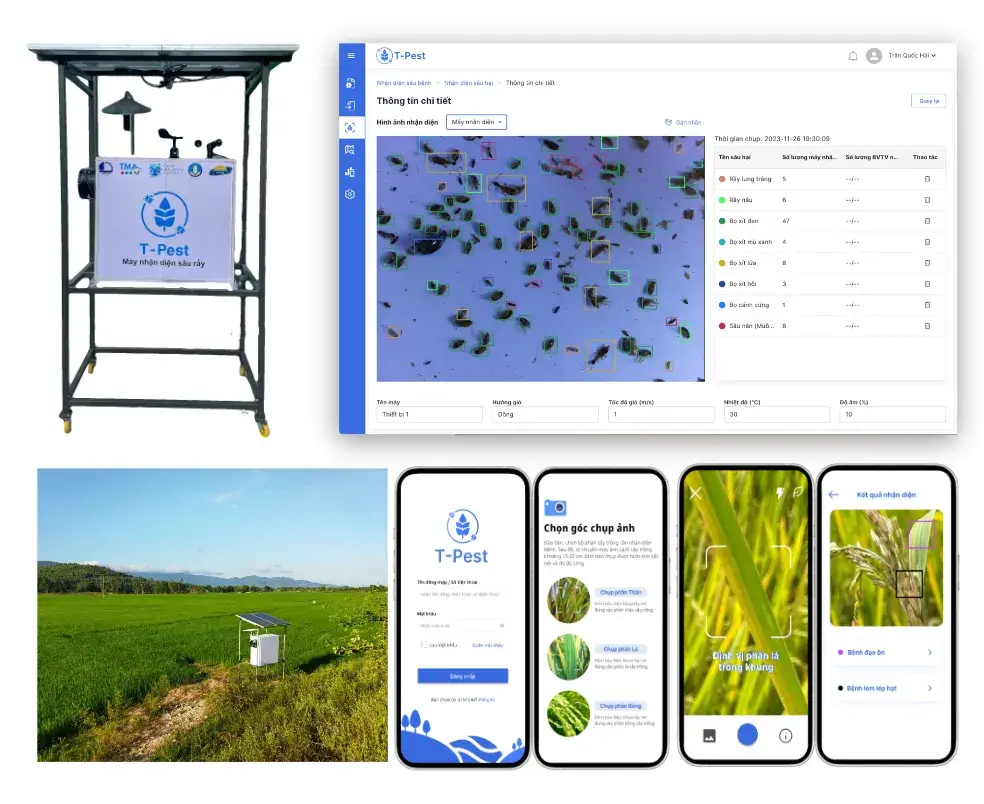
Farmers are facing increasing challenges from pests that threaten crop yields and livelihoods. To address this, we have developed an advanced solution for detecting and categorising pest species. The system enables quick and accurate identification of harmful insects, supporting targeted and effective use of pesticides.
Project Highlights
- Advanced AI Pest Detection System: Develop an AI-powered system to detect and identify pests and diseases in agricultural fields, supporting effective crop management.
- Real-Time Monitoring: Implement a pest detection machine that automatically identifies and classifies insects, providing timely notifications to farmers.
- Increased Productivity: Reduce manual labour in agricultural processes, enhancing efficiency and boosting productivity.
Challenges
- Challenges in Pest Classification: Difficulty in categorising pest species and determining the percentage of each type hinders timely alerts to farmers for targeted pesticide use.
- Labor-Intensive Processes: Traditional methods for pest and disease detection are time-consuming and require significant manual effort, leading to inefficiencies.
- Lack of Precision: Lack of accuracy in current detection techniques hampers timely and effective interventions, risking crop health and yield.
Solutions
Wolf develops a Pest Detection System that leverages AI to detect and identify pests and diseases in rice fields. Key features include:
- Automated Pest Classification: Utilise specialised machines to automatically identify and classify harmful insects in the field.
- Mobile App Integration: Allow users to take photos of rice plants and upload them to a mobile application for disease diagnosis.
- Real-Time Alerts: Implement a notification system that warns users of harmful insects or pathogens detected in real-time.
Benefits
- Enhanced Precision: Accurate classification enables more targeted pesticide use, reducing environmental impact and minimising crop damage.
- Improved Crop Health: Real-time alerts and early detection help farmers respond promptly to pest threats, protecting crop health and improving yields.
- Cost Savings: Reducing unnecessary pesticide use lowers input costs for farmers, making pest control more affordable and sustainable.
Related Case Studies

Employee and Visitor Access control system using Facial Recognition
Traditional access control systems face several issues, including unauthorised individuals gaining access, employees struggling with lost

Facial recognition smart locker system for secure asset management
Supermarkets are facing challenges as many customers continue to use traditional methods for storing their belongings, such as